Designing for risk
Engineering consulting firms may unknowingly hold some of the most sensitive infrastructure intelligence in the world: the digital blueprints of how critical systems operate. As artificial intelligence (AI) continues to enhance advanced persistent threats (APTs), these firms face a growing challenge: protecting the valuable intellectual property they manage every day. These firms often serve as repositories for sensitive design data, infrastructure plans, proprietary digital modelling techniques with advanced application software, and operational system documentation in the forms of drawings and calculations. Clients not only expect the work being performed to be technically sound, but also require assurance that the data supporting that work is secure. Clients reasonably assume their data stays secure whether it is stored, transmitted, or used in collaborative environments..
Understanding the scope of the risk means we must first examine the types of intellectual property (IP) engineering firms maintain and how that information flows through modern digital workflows. Next, we must consider what baseline cyber security practices are necessary to properly manage these risks. Finally, organisations must look towards solutions that go beyond ad-hoc security controls and instead align with recognised industry frameworks that provide measurable and repeatable assurances. For engineering consulting firms, understanding how intellectual property is stored, how risk tolerance is managed are crucial components of a robust safe infrastructure. Furthermore, both internal and client-facing assurances can be demonstrated through certified cyber security frameworks and are becoming an essential part of protecting critical design data in the modern threat landscape.
A recent example highlights the growing cyber security risks facing engineering consulting firms. In early 2026, cybercriminals claimed to have breached the systems of a prominent, U.S. engineering firm that provides transmission line design, surveying, and geospatial services to major utilities.
The attackers allegedly exfiltrated approximately 139 gigabytes of engineering data related to utility projects several large organisations in the energy sector. The dataset reportedly contained hundreds of LiDAR point-cloud files, high-resolution orthophotos, and engineering design documents covering transmission corridors and substations, which were subsequently offered for sale on a dark-web forum for roughly 6.5 bitcoin. (1) While investigations into the claims continue, the incident illustrates how engineering consulting firms frequently hold detailed operational data about critical infrastructure systems. Protecting the integrity and confidentiality of power transmission infrastructure data is essential to safeguarding critical operations and reducing the risk of disruption to vital services.
The real danger of compromised engineering data becomes clear when we consider how it connects to the operational systems that control critical infrastructure. In the simplest terms, Supervisory Control and Data Acquisition (SCADA) systems form the operational backbone for many Industrial Control Systems (ICS). These systems monitor and manage critical infrastructure such as energy grids, water and wastewater facilities, oil pipelines, and manufacturing environments, and these networks are responsible for the resources modern society depends on. From a cyber security perspective, protecting these systems can mean the difference between preventing and enabling events such as major power outages, water contamination incidents, or even industrial accidents. While these scenarios may sound extreme, they remain within the realm of possibility for sophisticated cyber adversaries, including those operating at a nation-state level.
Now let’s focus on understanding how IP is stored within engineering and infrastructure consulting firms. Whether it exists in CAD repositories containing structural plans or in digital signatures associated with professional engineering seals, these assets represent critical intellectual property. Increasingly, this data also includes LiDAR mapping datasets, digital twins of infrastructure systems, and architectural documentation supporting SCADA and other industrial control environments. The engineering consulting environment is a fluid workspace that requires rapid access for engineers and designers, while still maintaining the due diligence necessary to ensure a secure and continuously monitored threat surface. (2)
Next, let’s turn to how organisations handle risk tolerance and mitigation. One of the most common misconceptions is that uncertainty equals risk. In reality, uncertainty simply reflects a lack of knowledge, while risk can be quantified and analysed. If you roll a pair of dice and don’t know the outcome, that’s uncertainty. But understanding the likelihood of rolling a specific number—that’s risk. The outcome is unknown, but the odds are not. The two concepts are related, but they are not interchangeable.
Figure 1. Distinguishing Risk from Uncertainty: Known Outcomes
So where does this intellectual property live? Is it vulnerable?
Versus Unknown Outcomes
Risk involves measurable probabilities and known outcomes, whereas uncertainty involves unknown outcomes and probabilities.
This distinction matters in cyber security because organisations often rely on vague, qualitative descriptors such as “medium risk,” “high risk,” or “unknown risk.” While these labels may communicate urgency, they rarely quantify the probability or impact of a potential event. Without that level of clarity, it becomes difficult for organisations, especially engineering and infrastructure consulting firms responsible for protecting valuable intellectual property, to prioritise security decisions or allocate resources effectively. In environments where engineering data, infrastructure designs, and operational documentation must be protected, managing cyber risk requires more than intuition, it requires structured frameworks that allow organisations to evaluate and mitigate risk systematically. (3)
Engineering by nature deals with risk and structural tolerances when designing anything from a bridge, to a dock, to a storm sewer line. Understanding tolerance levels and safety factors is intuitive within any engineering design process. Cyber security risk management follows a similar philosophy, although it operates under a different set of guidelines and principles. The key is implementing governance along with clearly defined policies and procedures.
Cyber security certifications for engineering firms do more than demonstrate technical achievement; their value also lies in the outward-facing trust they provide to clients, regulators, and partners. These certifications offer assurance that sensitive designs, infrastructure data, and operational systems are protected. Furthermore, they provide a standardised way to demonstrate that an organisation follows recognised industry security best practices rather than relying on informal or inconsistent controls.
Here are a few common cyber security certifications for engineering firms. We can see that different certifications serve a wide array of purposes for different types of work individual engineering firms perform. Rather than relying on intuition or informal controls, these frameworks provide a structured way to understand how risk behaves—and how it can be consistently managed across projects and organisations.
For example:
- ISO 27001 focuses on establishing and maintaining an Information Security Management System (ISMS). It is valuable when managing sensitive design documents, proprietary calculations, and project data across multiple teams, vendors, and clients. It helps ensure that information is consistently protected throughout the project lifecycle.
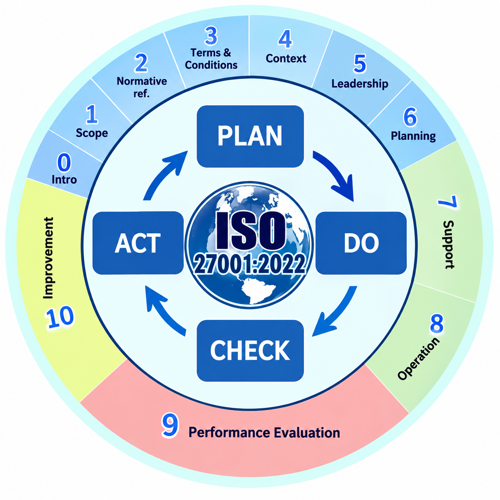
Figure 2. ISO 27001:2022 Plan-Do-Check-Act (PDCA) Continuous Improvement Model
This illustrates the Plan-Do-Check-Act (PDCA) model that underpins ISO 27001:2022. The framework promotes continual improvement by requiring organisations to establish security objectives and controls (Plan), implement and operate those controls (Do), monitor and assess their effectiveness (Check), and make corrective improvements based on results (Act). This cyclical approach can help engineering firms maintain and mature their information security programmes as business operations, technologies, and threats evolve.
- SOC 2 evaluates controls related to security, availability, and confidentiality. This is especially valued for engineering firms that utilise cloud-based design tools, project management platforms, or client data portals. SOC 2 can demonstrate that these systems are secure and reliable. This is a great security asset to have in place and can provide extra assurance when collaborating with external stakeholders.
- CMMC (Cybersecurity Maturity Model Certification) is critical for firms working with the U.S. Department of Defense or on federally funded infrastructure projects. Many engineering firms supporting defence, energy, or industrial base projects must meet CMMC requirements to properly safeguard Controlled Unclassified Information (CUI) contained in technical drawings, specifications, and system designs.
- HITRUST integrates multiple frameworks into a single certifiable model, making it a flexible option for organisations that must meet a variety of regulatory and risk management requirements. Engineering firms often work across industries such as energy, infrastructure, or government contracting, where different standards may apply. This flexibility allows organisations to adapt to varying regulatory and client expectations. HITRUST allows organisations to map controls across frameworks,, creating a more unified and scalable approach to managing risk. While it is widely adopted in healthcare, its underlying structure is industry-agnostic and can be effectively applied to engineering environments that require strong governance, documentation, and control validation.
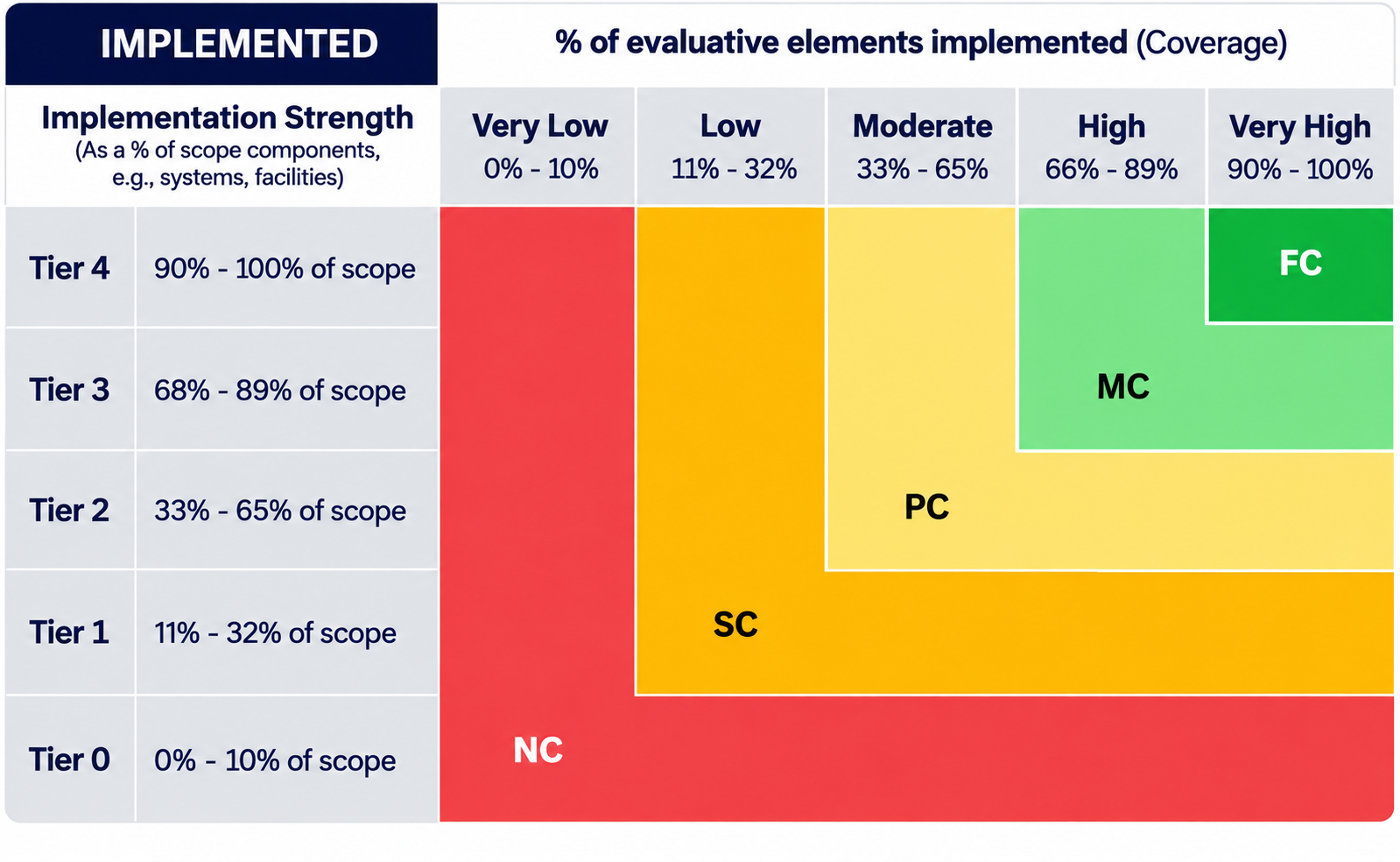
Figure 3 illustrates the HITRUST scoring model, which evaluates security control maturity and implementation coverage. This approach provides a structured method for assessing cyber security programme effectiveness and identifying opportunities for improvement.
While each framework differs in structure, they all aim to accomplish the same goal: turning abstract cyber security concerns into measurable, manageable risk.
Ultimately, engineering consulting firms are not just designing infrastructure; they are safeguarding the digital blueprints of how critical systems operate. As cyber threats continue to evolve, particularly with the growing use of artificial intelligence in advanced attacks, protecting this intellectual property becomes just as important as the physical systems it supports. Meeting this challenge requires organisations to move beyond informal security practices and towards approaches that emphasise accountability and measurable outcomes. Industry standards are increasingly driving the adoption of cyber security best practices, requiring firms to demonstrate not only technical capability, but also responsible data stewardship.
By adopting structured cyber security frameworks and certifications, engineering firms can transform uncertainty into measurable risk and clearly demonstrate that their most valuable data is not only well-designed, but well-protected. In today’s threat landscape, certifications serve as a beacon of trust, signalling that securing engineering data is no longer optional, but a fundamental part of responsible design.
References:
- Critical Infrastructure Data for Sale: 139GB of US Power Grid Engineering Stolen | State of Surveillance - State of Surveillance
- CAD Data: A Pandora's Box of Intellectual Property Risks – Dan Murray, CEO, Vertex Software
- Undi Gunawan | LinkedIn – Undi Gunawan